A Rare Silk, a Changing Landscape and the Women We Love
For over 15 years now, I've been lucky enough to work with a really talented group of artisans in the Highlands of Madagascar, called Voajanahary. Many of you have purchased their stunning wild silk scarves and yarn, but you might not know just how special the story is behind their gorgeous silk.
These artisans are truly skilled, and their work is not only beautiful, but also steeped in tradition and history. The wild silk they produce is unlike anything else out there, and I feel privileged that Handspun Hope has been a part of their journey.
Personally, I would love to know how the process of preparing the Borocera silk was first started because their methods are fascinating. For generations, ladies spun this silk into threads and then wove burial shrouds for their loved ones. That is, until a volunteer from the Peace Corp in the early 2,000’s encouraged them to weave scarves that they could sell.
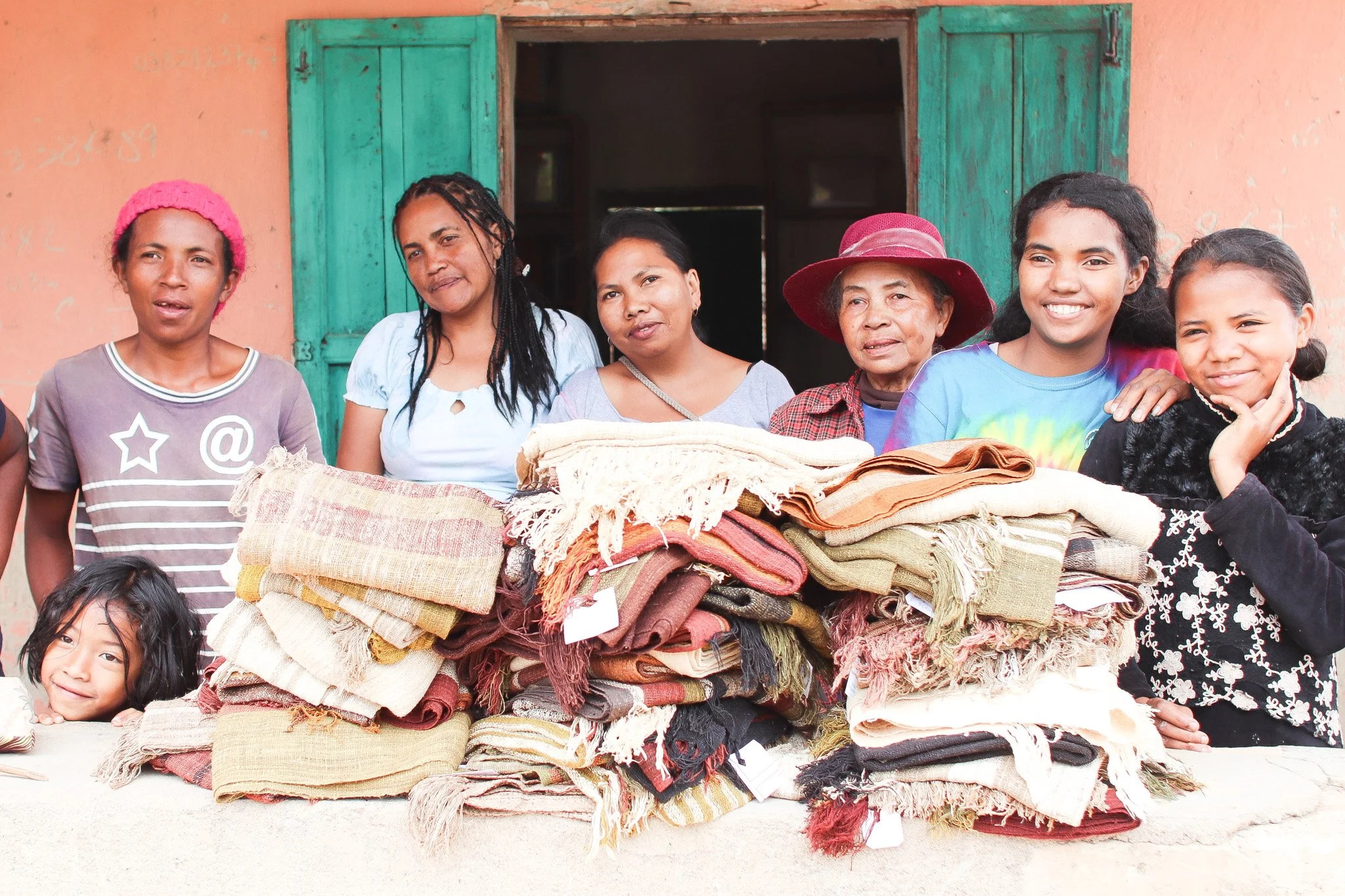
A few ladies from Voajanahary Cooperative
The Borocera silkworms don't feed on mulberry trees like most silk worms do - instead, they're found in the wild, in the Tapia forests of Madagascar. The caterpillars feed on the leaves of the Tapia tree, and when they're ready, they spin their own cocoons.
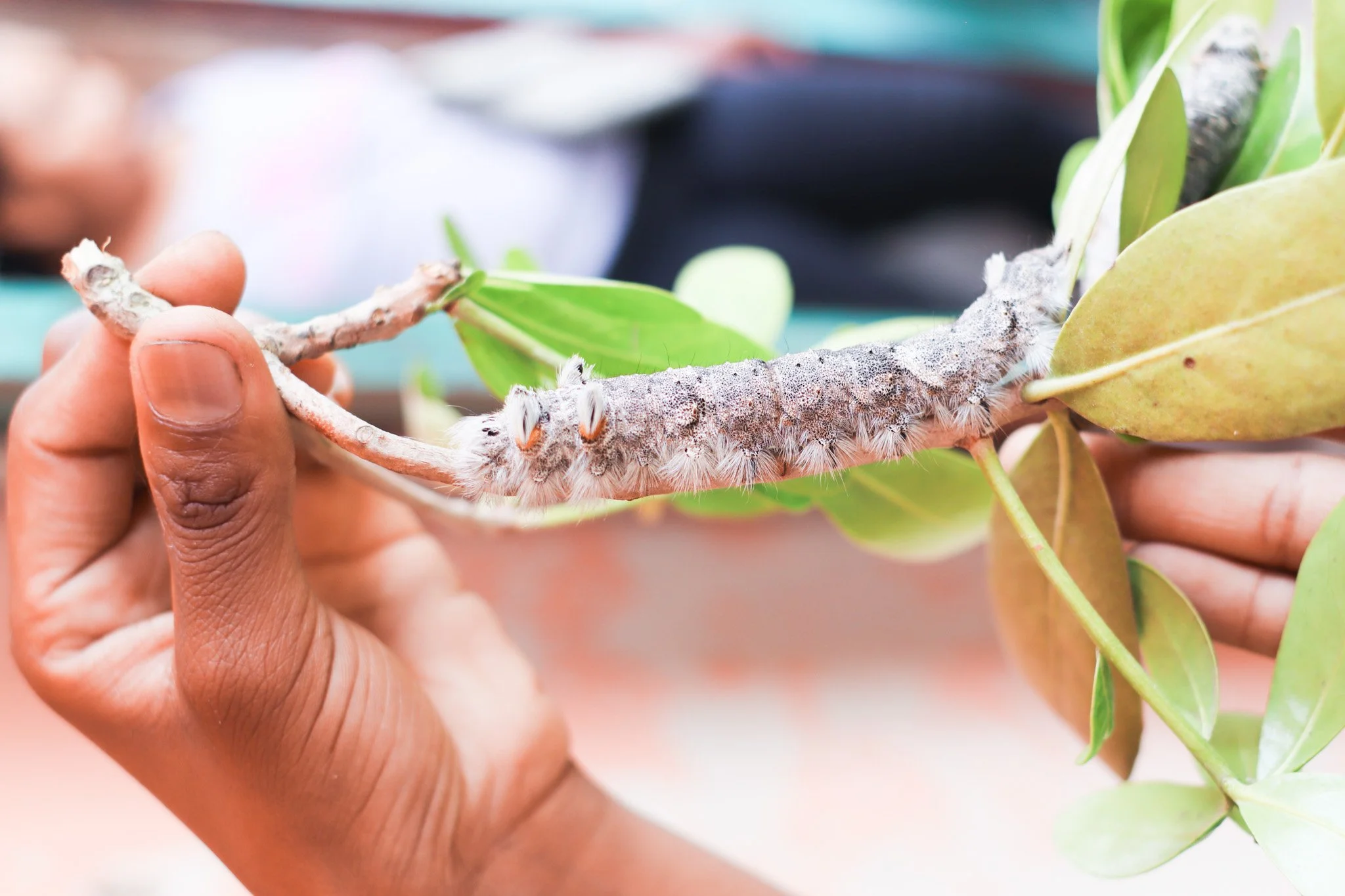
The Borocera silk worm - it’s a big one!
The women of Voajanahary, collect these cocoons by hand, and then they go through a series of rigorous steps to get the silk ready. This includes burying the empty cocoons in the ground surrounded by rice hulls and then pouring boiling water over them for several days. After this wait, the raw silk emerges from the ground and is ready to be spun using a drop spindle - the same tool the ladies at Handspun Hope used when we first started spinning wool.
The dyeing process is also done naturally over an open fire, using methods that have been passed down through generations, as well. They use native plants such as passionfruit, nato bark, mushrooms, turmeric, water lilies, and even black mud! When I asked the eldest woman, the dye master of the group, how long she had been doing this, she said that she learned the skill from her mother, who learned it from her mother.
What makes this silk especially meaningful to me is the tradition and livelihood behind it. For generations, the harvesting, spinning and dyeing of wild silk has provided women in this region with an important source of income and a way to support their families. In a place where there are simply no other ways to sustain themselves, God provided the wisdom and natural resources they needed to survive and flourish.
For the past few years, we have taken much of the silk yarn to Rwanda where the ladies working for Handspun Hope have naturally dyed it with native Rwandan plants, giving us an incredible color palette from both Madagascar and Rwanda.
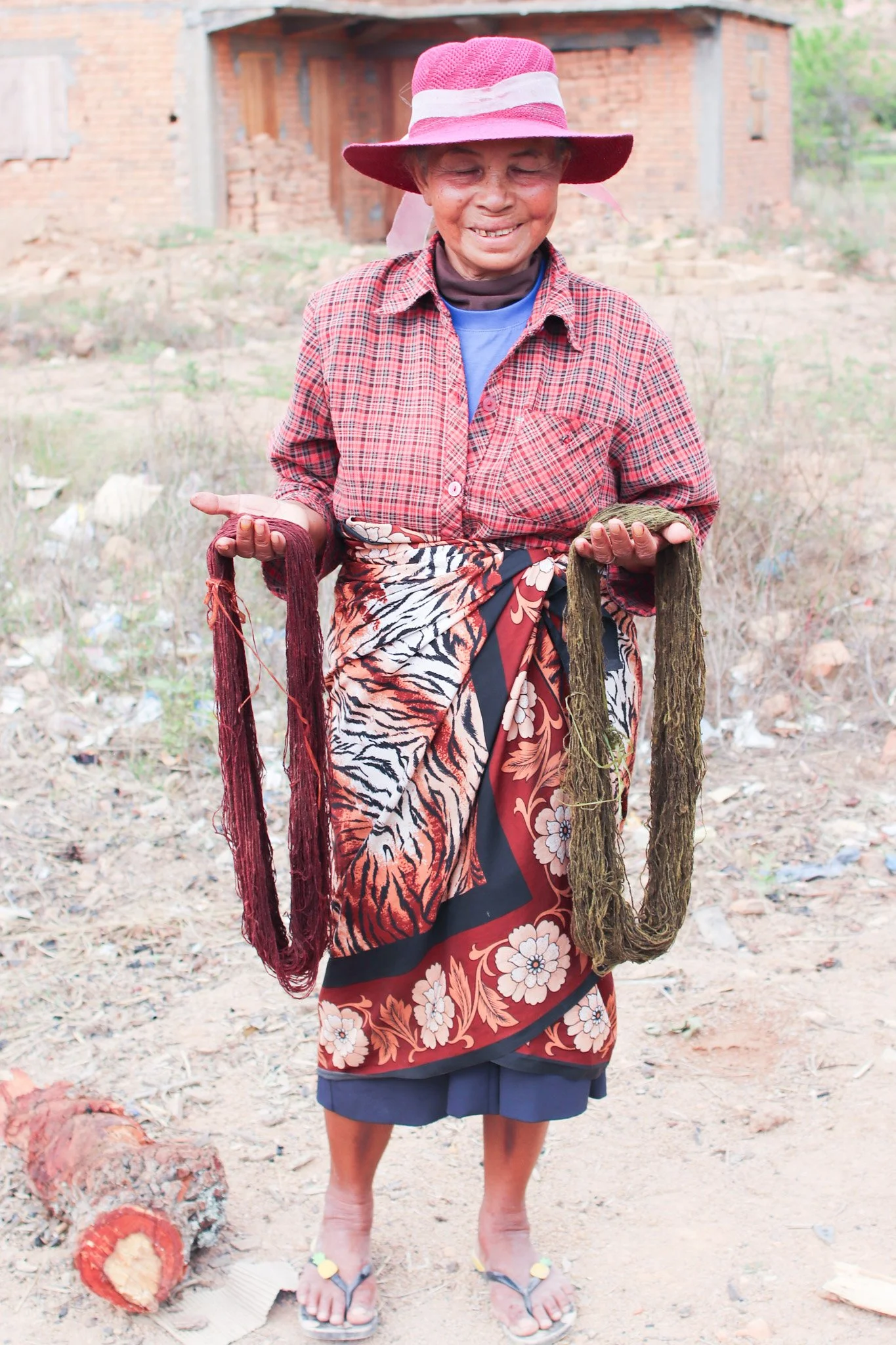
Voajanahary’s dyemaster, Rapery, holding freshly dyed yarn
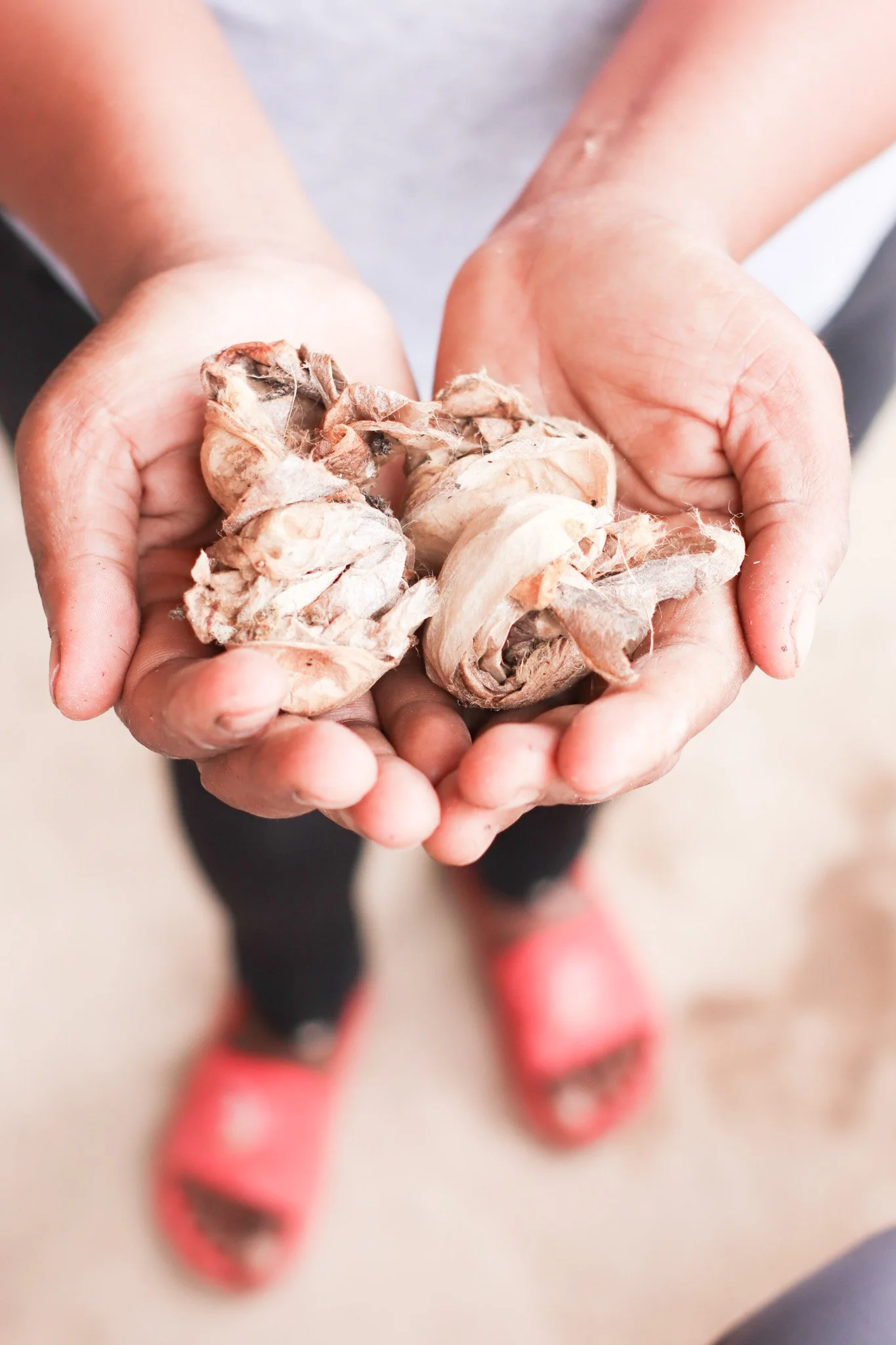
Recently unearthed cocoons, with raw silk ready to be spun
Last week, I spoke with Nivo, who leads Voajanahary, about a new order. She reluctantly confessed the increasing difficulty the women are having finding Borocera cocoons.
The ladies simply cannot find enough cocoons to continue producing the yarn and silk scarves that we have carried for so long. For the first time in our 15-year relationship, we are facing the reality that this beautiful wild silk is no longer available to us.
There isn't one clear answer. Madagascar's Tapia forests have faced fires, habitat loss and changing environmental conditions for many years. Researchers have also documented disease as a possible contributor to declining Borocera populations.
But very recently, another concern has emerged.
Over the past two years, Madagascar has undertaken a large-scale campaign to control locusts that threaten crops and food supplies. Hundreds of thousands of hectares have been treated through aerial and ground pesticide applications.
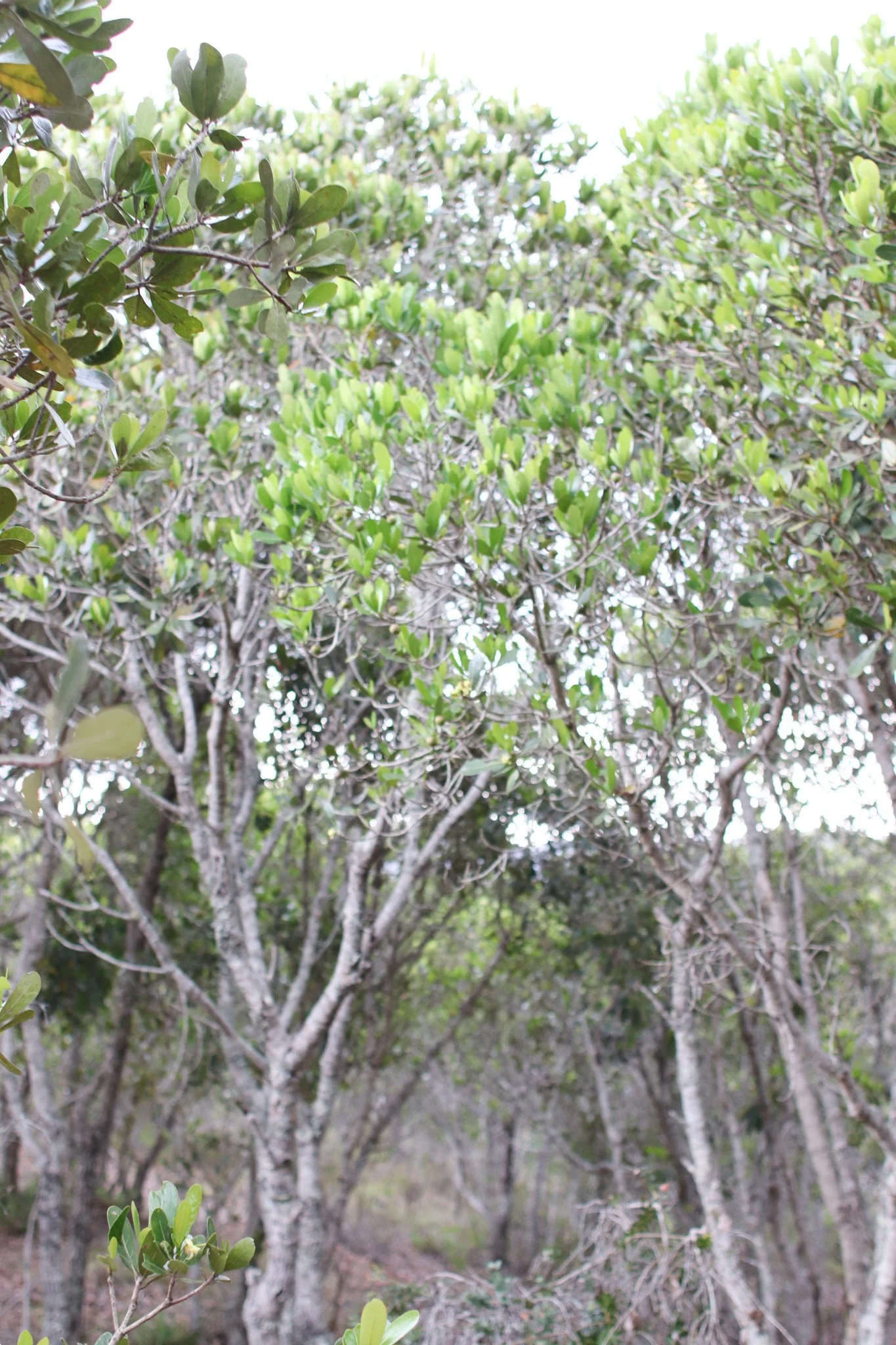
Tapia Trees
Nivo also told me that honey has disappeared from their local market. In a community where honey would normally be available, they are now unable to find it.
Taken individually, each of these things could potentially have another explanation.
But taken together—the dramatic decline in wild Borocera, the death of domestically raised silkworms after eating local vegetation, and the apparent lack of locally available honey—they raise very real questions about what may have changed in the environment these insects depend upon.
Could the spraying be contributing to their disappearance? We don't know but during my conversation with Nivo, this is what she firmly believes has happened.
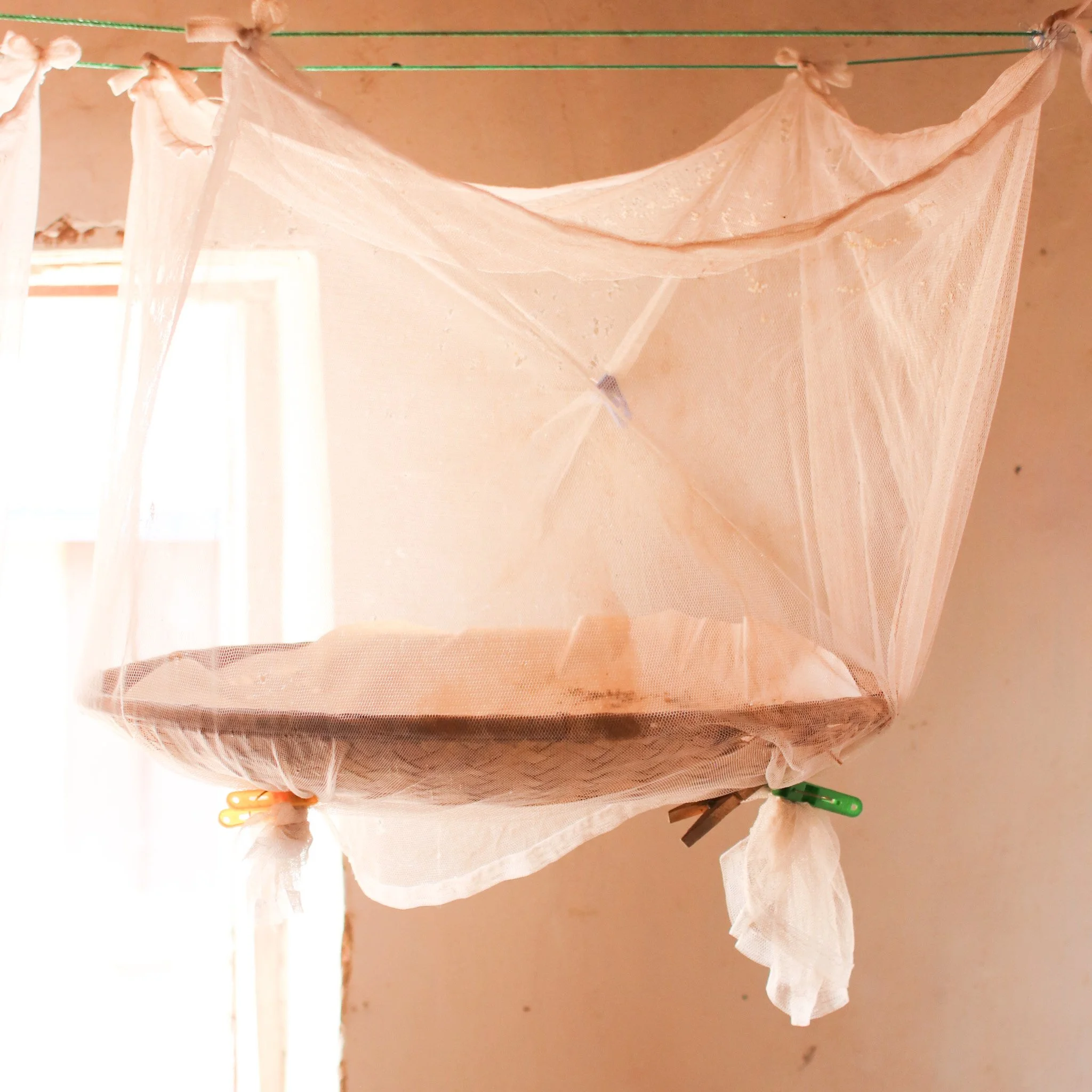
A shallow enclosure of domestic silk worms
We have not found specific documentation proving that the pesticide spraying caused the decline of the Borocera in the forests where these artisans gather their cocoons. There are other environmental factors that could be responsible, or it could be a combination of things.
What we do know is that pesticide treatments have taken place in the same region where our silk comes from, and the artisans who depend on these silkworms are now struggling to find them.
This is about more than silk.
Madagascar's locust problem is very real. Locusts can devastate crops and threaten the food supply of families who are already incredibly vulnerable. There are no simple answers here.
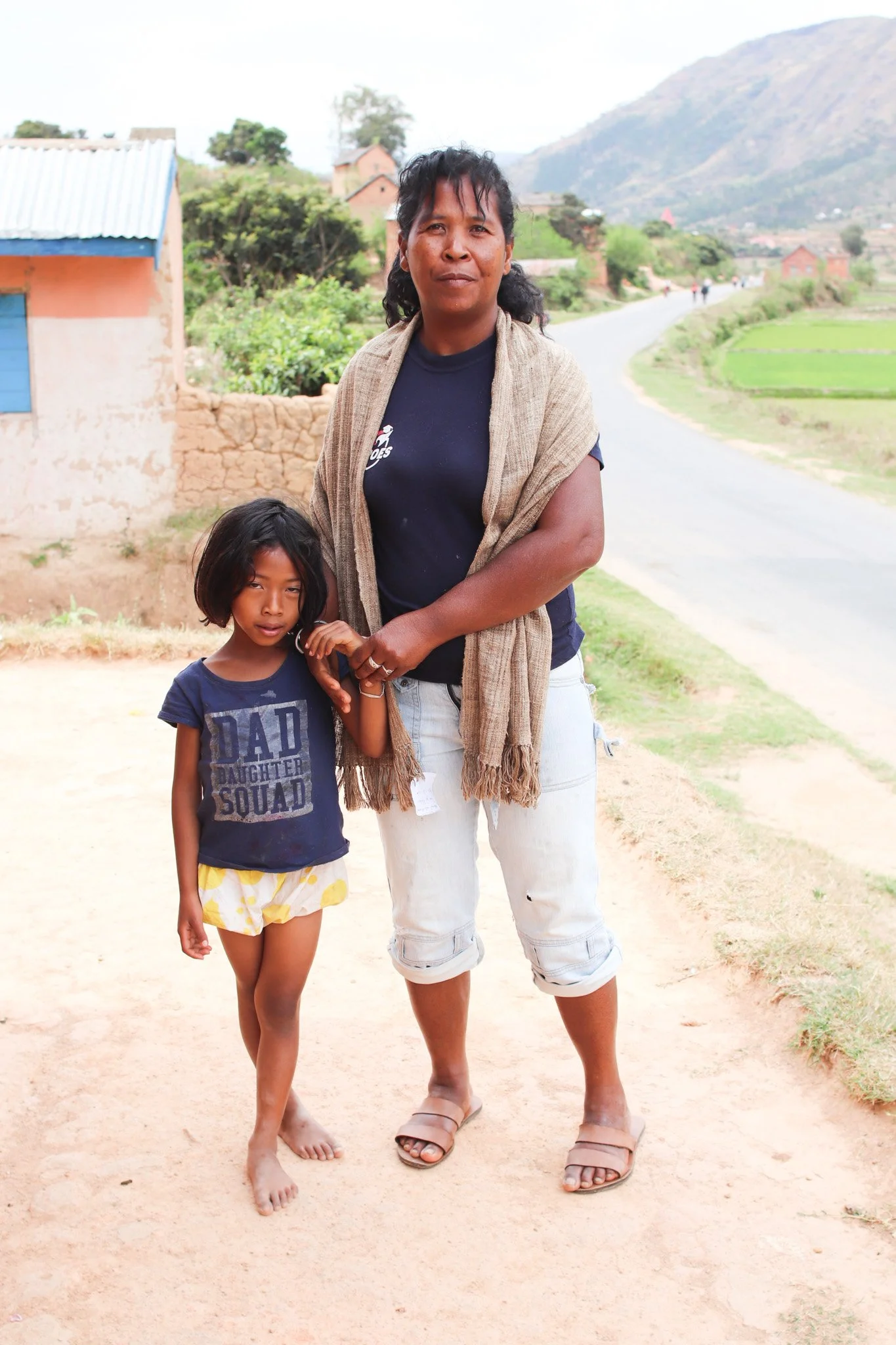
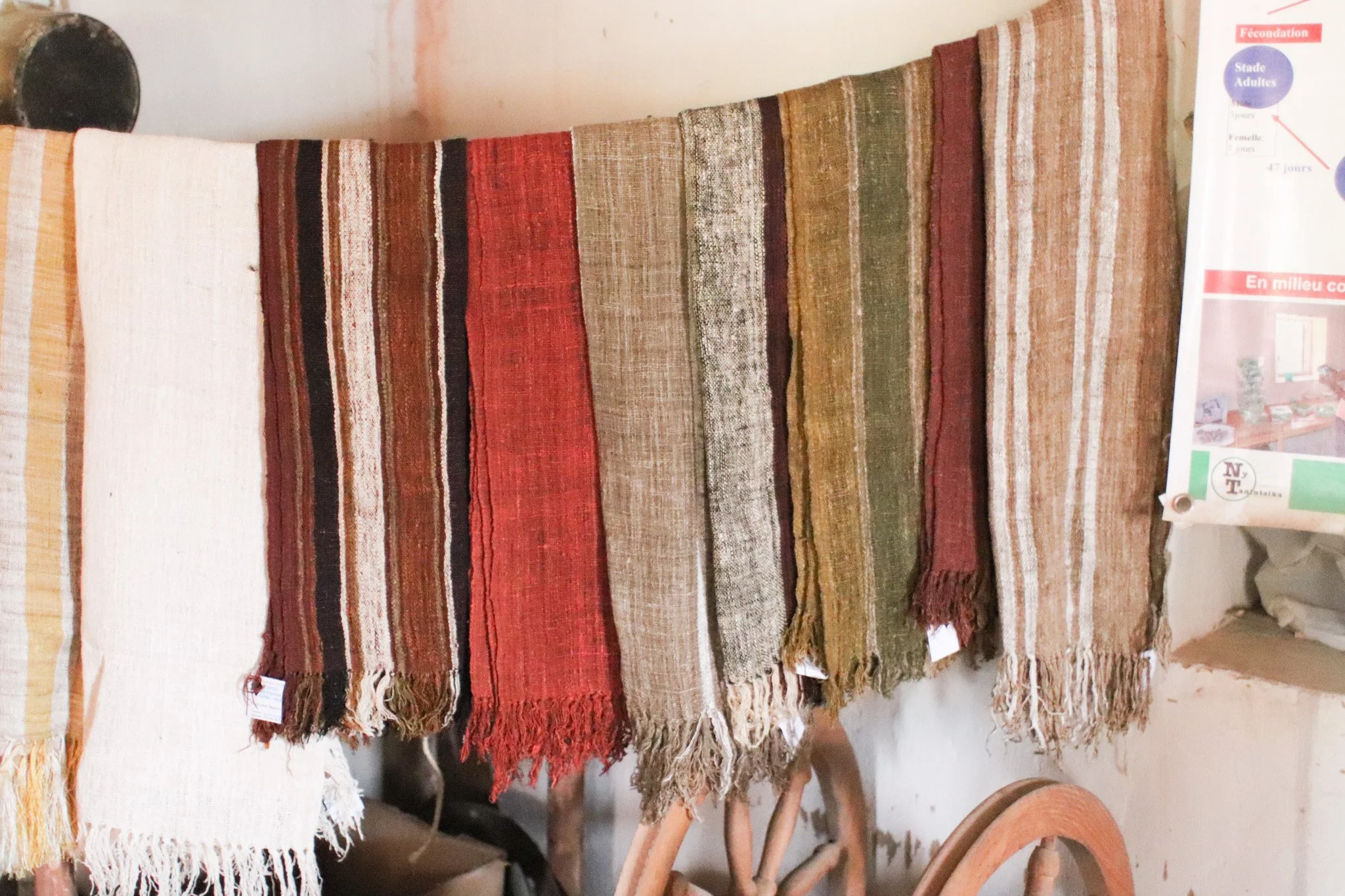
Scarves for sale in Voajanahary’s workshop - we bought most!
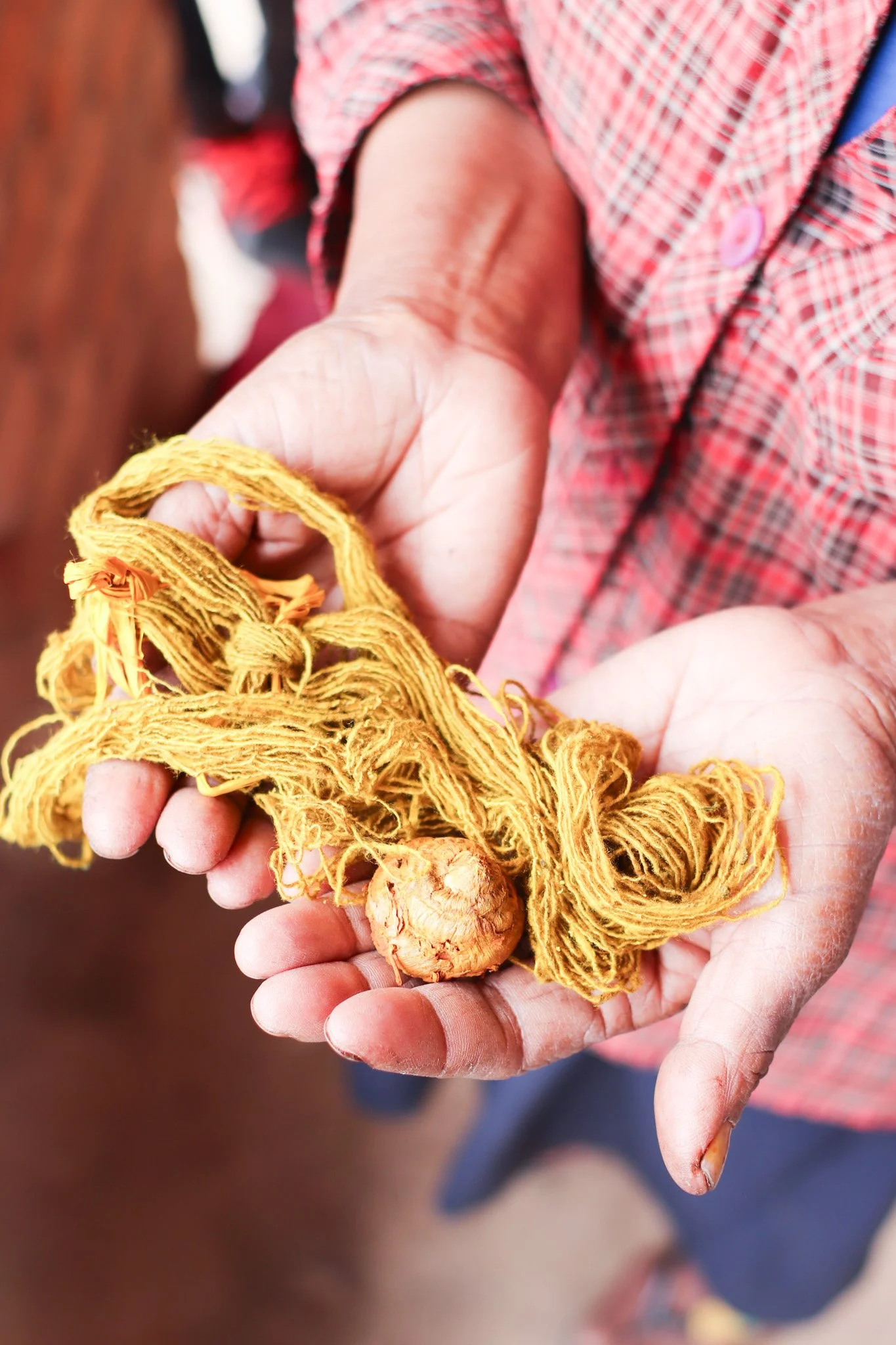
Borocera silk naturally dyed with turmeric
This is so much more than a beautiful fiber. It is a centuries-old tradition, passed from one generation of women to the next.
We were really lucky to have our story in Farm & Fiber Knits magazine earlier this summer. The article was called "African Artisans, Grazing Caterpillars & Glorious Silk" and it talked about the Borocera, the women from Voajanahary who harvest and spin its silk, and the women from Handspun Hope in Rwanda who helped us create something special with it. The magazine even made a beautiful pattern for a Tapia Scarf using our unique Borocera silk. It was a great chance for us to share a fiber and an artisan tradition that not many people outside of Madagascar know about. The women of Voajanahary have a special skill for harvesting and spinning the silk, and the women from Handspun Hope in Rwanda have been a big help in creating something truly one-of-a-kind from it. We felt really happy to be able to share this story and introduce people to the Borocera silk and the talented women who work with it.
Sadly, we had no idea how quickly that story was about to change.
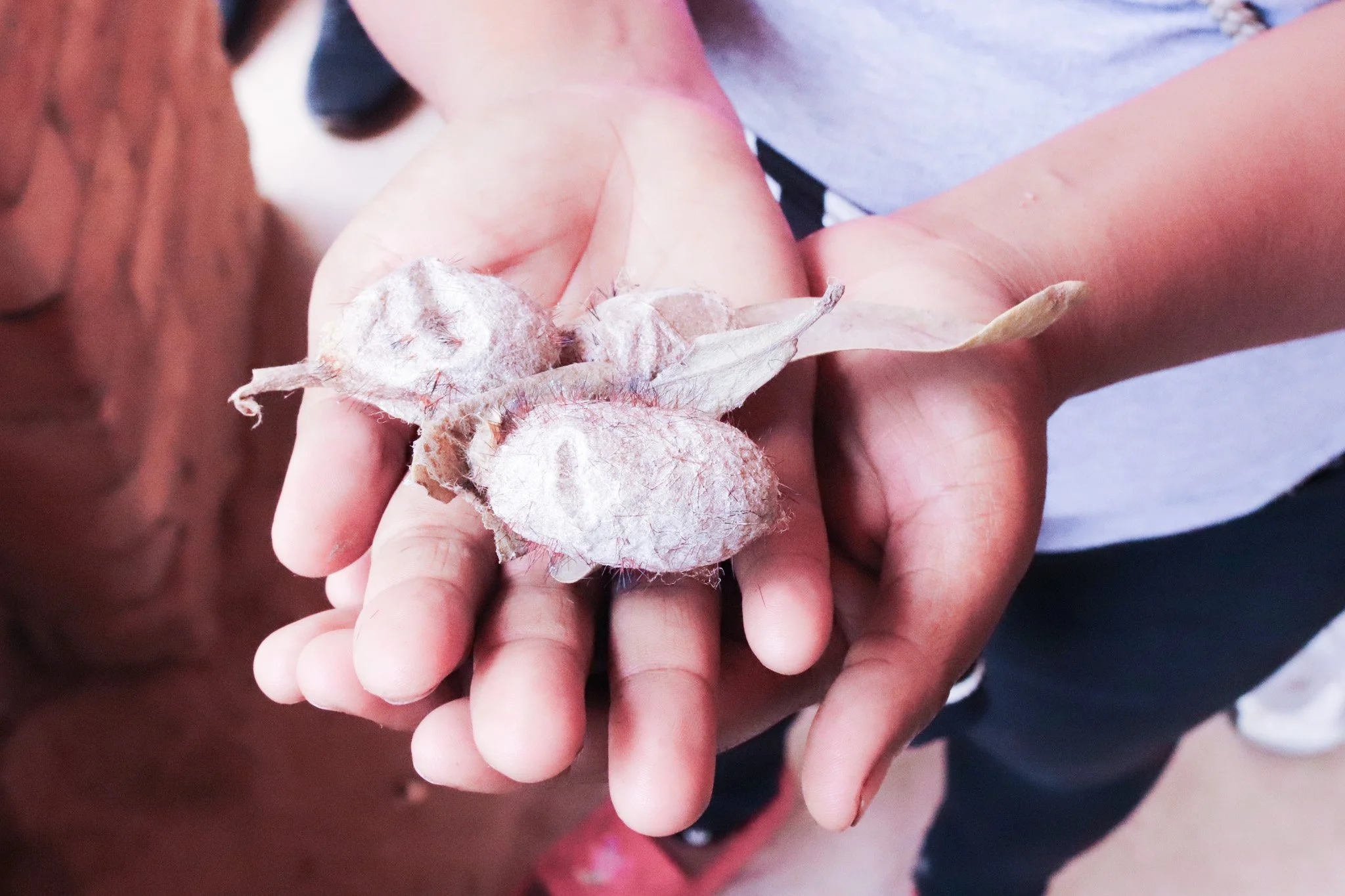
Empty cocoons gathered in the Tapia forest
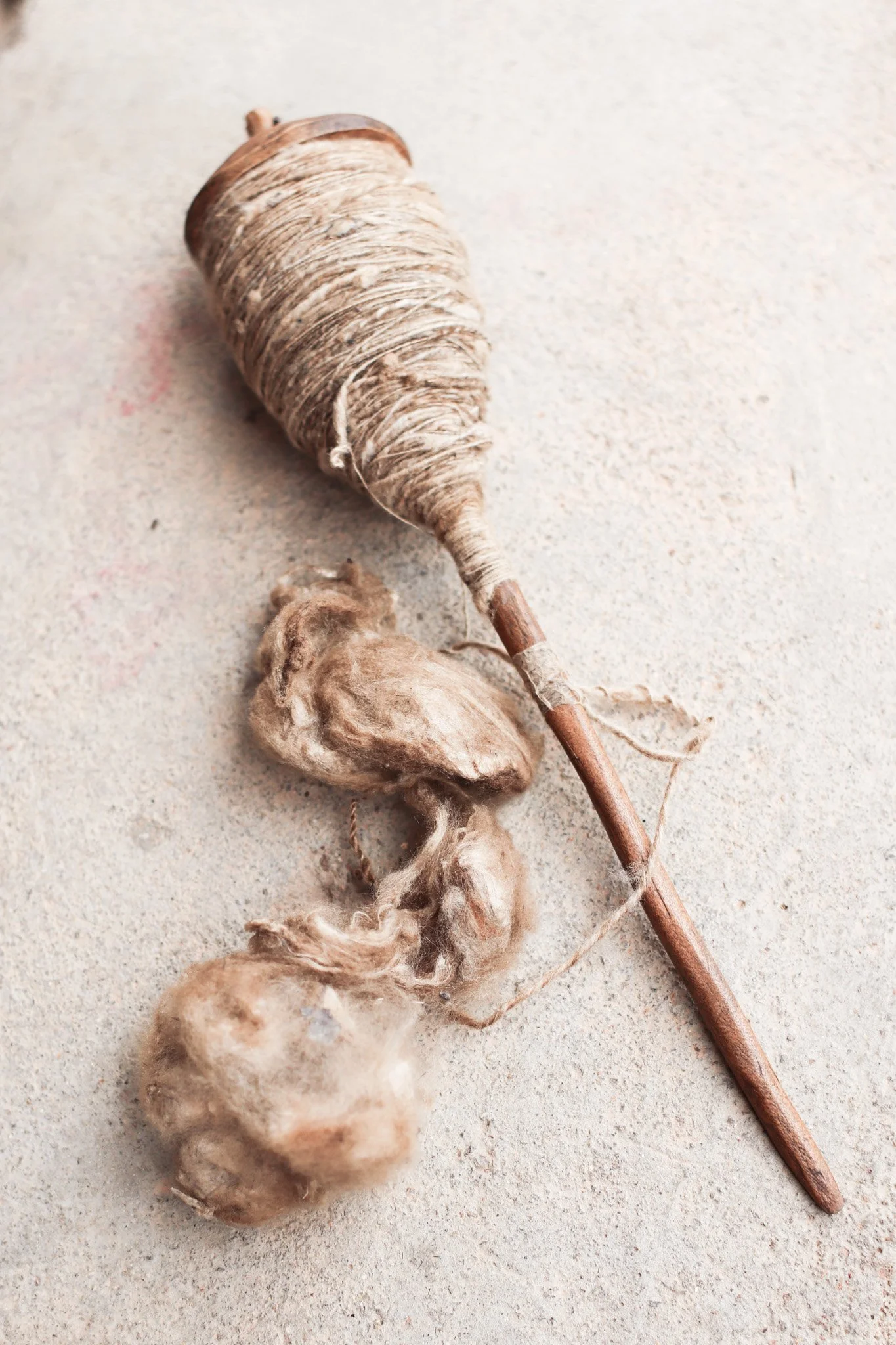
Silk spun into thread on a drop spindle
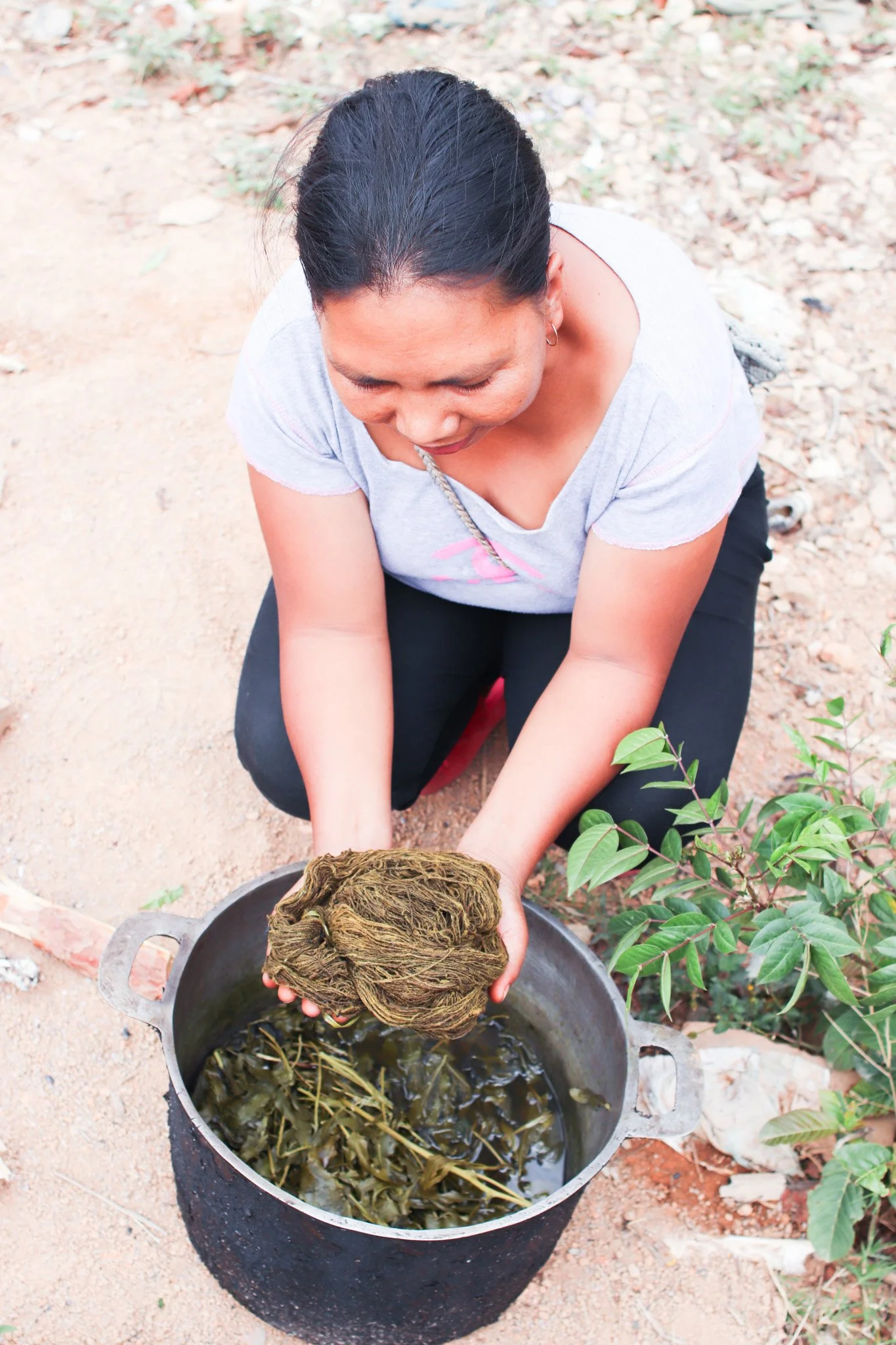
A dye bath created from fresh psaidia leaves
Some of the pesticides being used are specifically designed to kill locusts and their larvae. The concern, of course, is that they would also kill other insects living and feeding in the same environment—including the Borocera.
In addition to gathering wild Borocera silk, the women also raise domestic silkworms in their homes. These are different from the wild Borocera. The women care for them and feed them mulberry leaves gathered locally. A few months ago, Nivo said something happened that they had not expected. Their domestic silkworms died after eating the locally gathered mulberry leaves.
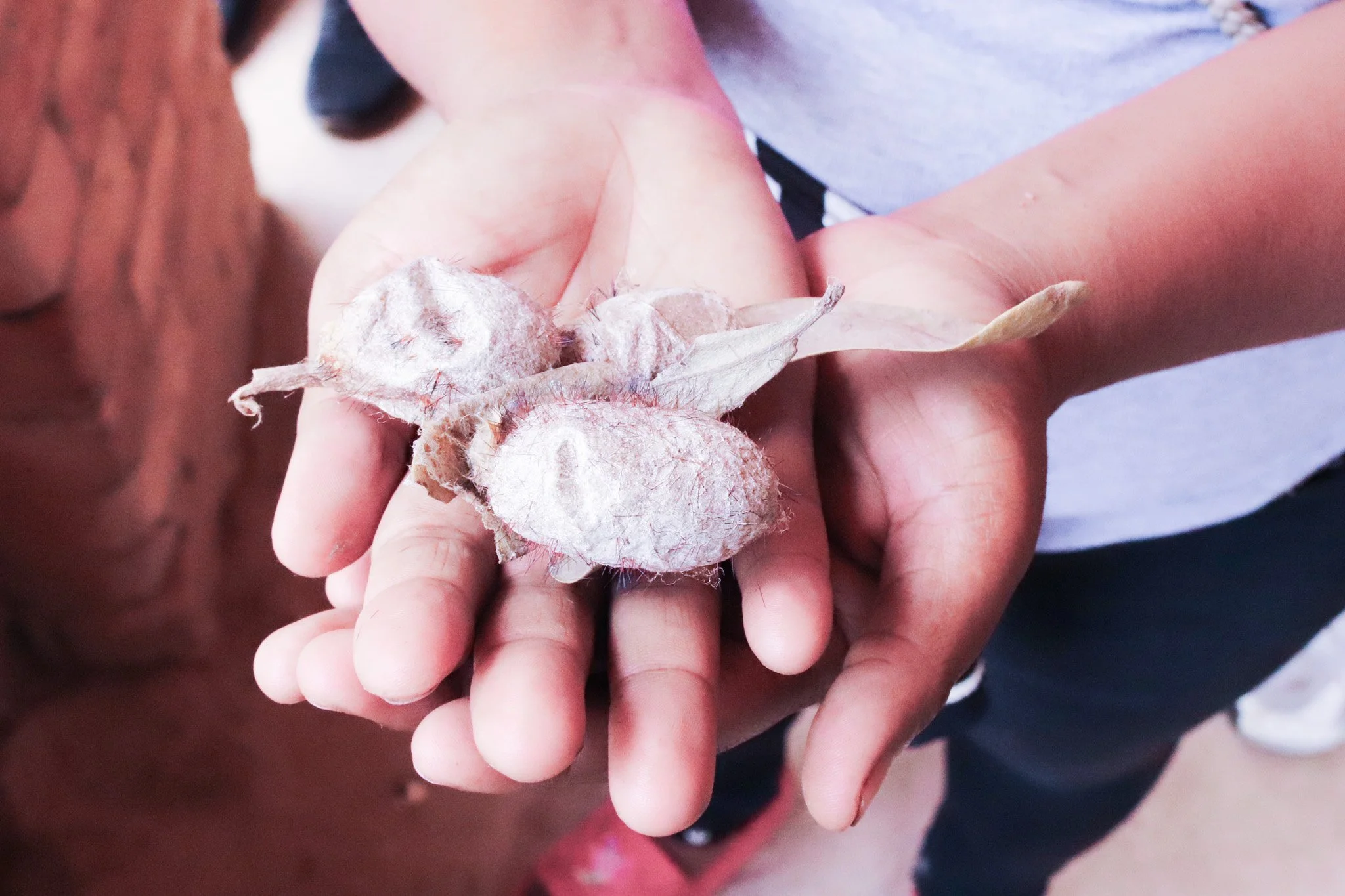
Empty cocoons gathered in the Tapia forest
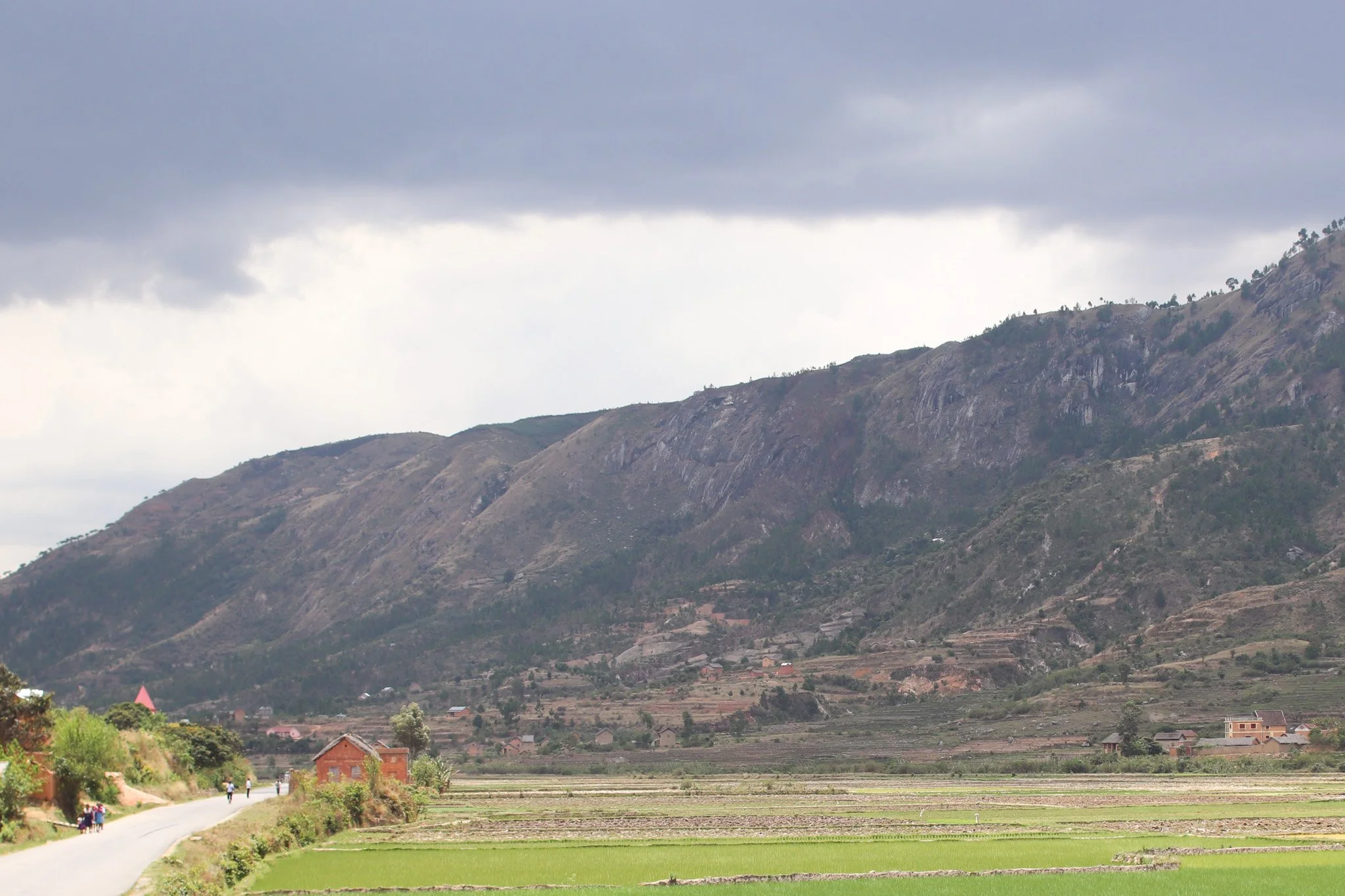
Sahatsiho-Ambohimanjaka in Madagascar’s Amoron’i Mania region, an area with a tradition of wild Borocera silk production.
This situation also shows us how everything is linked together. If an insect becomes extinct, it can affect the availability of the fiber. And when that fiber is no longer available, it can have a direct impact on the livelihood of an artisan who relies on it for their work. And when work disappears in a place like Madagascar, the impact on a family can be significant.
This isn't just about finding a new supplier for us. We've been working with Nivo and the other women for over 15 years, spending hours traveling to visit them and supporting their work. Buying their silk has been a reliable source of income for them. It is not just a business transaction. We have seen the impact our purchases have had on their lives and that’s what makes the relationship important to us.
So when we're told that the silk supply is running out, our first thought isn't, "Where can we find more?" Instead, we ask ourselves, "How can we keep supporting them?" We will continue this relationship, even if it means finding a new way to do things.
For now, this means that our Borocera wild silk scarves and yarn will no longer be readily available as they have been in the past. The pieces we have remaining are truly special, and once they are gone, we simply don't know when—or if—we will ever be able to replace them.
However, our relationship with Voajanahary isn't ending. We are already looking for other ways to continue working with them and supporting their families and we are trusting God for wisdom in that process.
Because after 15 years, these aren't simply women who make silk products for us. They are part of our story. And we intend to remain part of theirs.
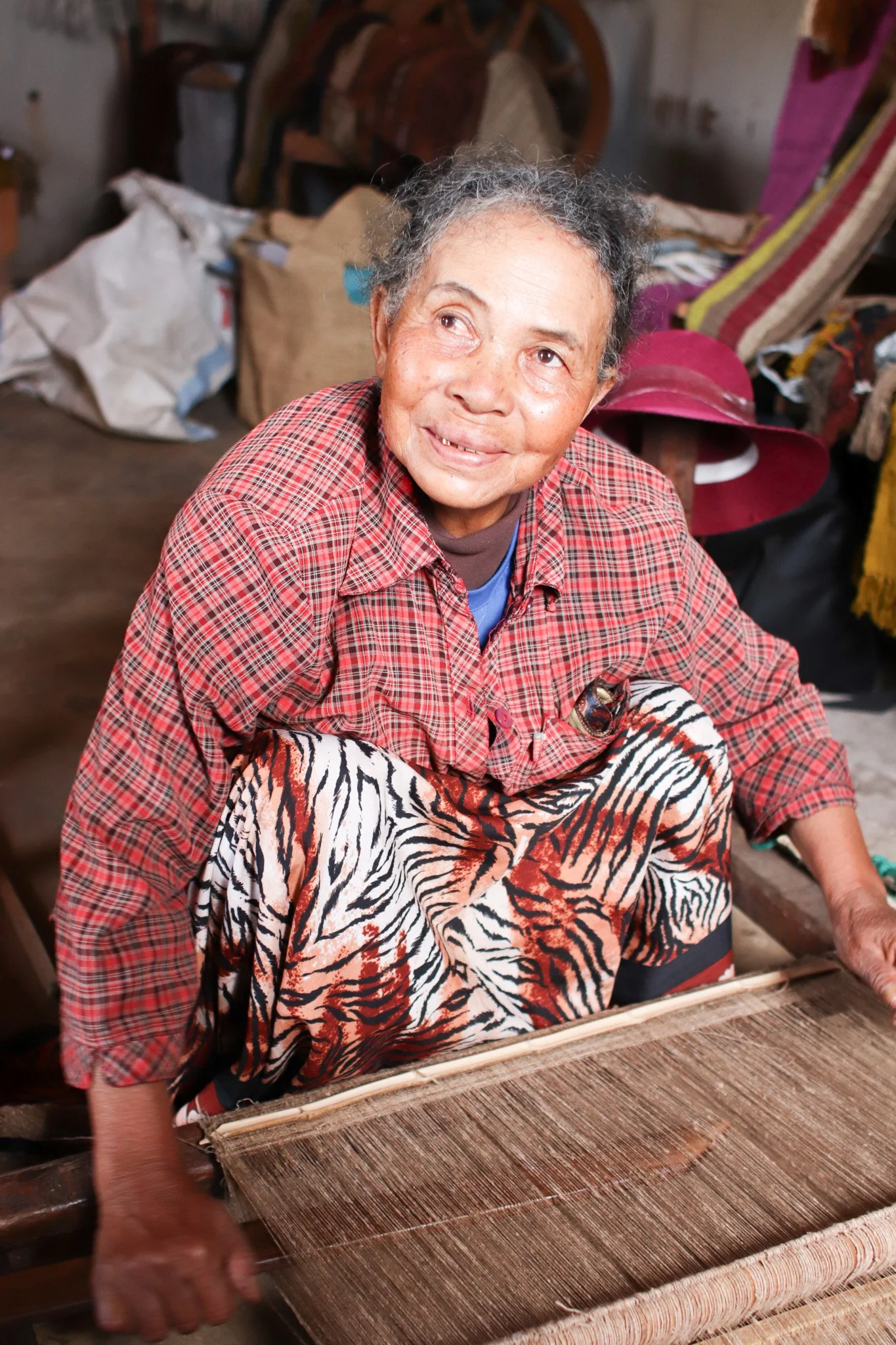
Rapery sits at her handmade loom to weave a scarf
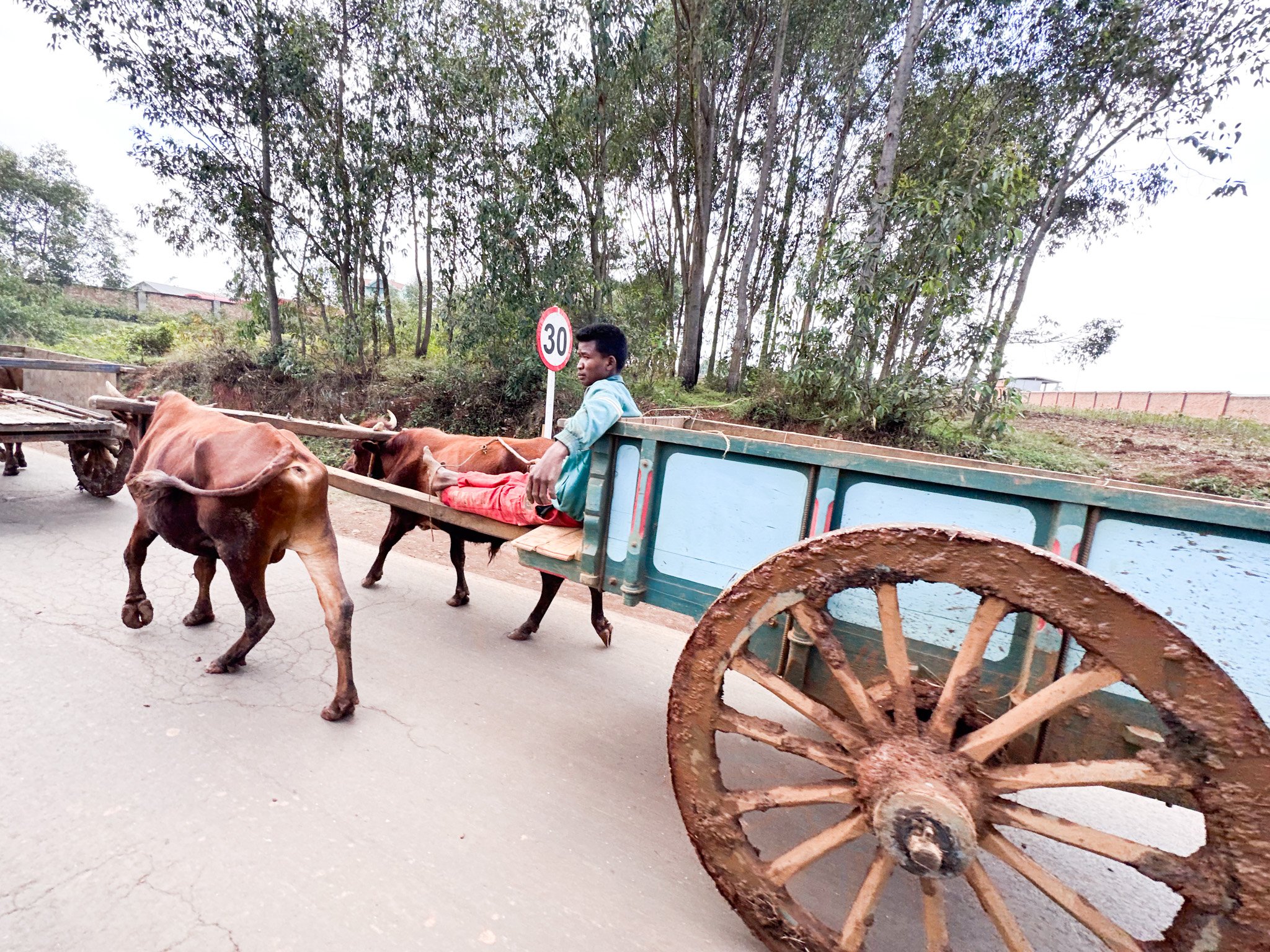
On the road to visit the women of Voajanahary